Address
Tabarbour, Amman, Jordan
Work Hours
Saturday – Wednesday:
10:00 AM – 8:00 PM
Thursday:
10:00 AM – 6:00 PM

Address
Tabarbour, Amman, Jordan
Work Hours
Saturday – Wednesday:
10:00 AM – 8:00 PM
Thursday:
10:00 AM – 6:00 PM
Losing a single tooth can look like a minor problem. It rarely stays that way. Neighbouring teeth start drifting into the gap, the opposing tooth begins to over-erupt, and the bone that once supported the missing root slowly loses density. That chain reaction is exactly why dental implants in Tabarbour have become one of the most requested treatments in the area — an implant is the only option that replaces the root itself, not just the visible crown.
But an implant is not a single, standardised procedure. There are different approaches, timelines that vary from patient to patient, prerequisites that must be met before surgery, and specific factors that determine whether the implant lasts for decades or fails within a couple of years. This guide walks through all of it in plain language: when you actually need an implant, what the alternatives are, how the stages unfold, what drives the cost, and — just as importantly — when an implant is not the right choice for you.
What’s in this guide
A dental implant is an artificial root placed inside the jawbone to take over the job of the missing natural root, topped with a crown that looks and functions like a real tooth. Three components make up the complete restoration:
What makes the whole thing work is a process called osseointegration — bone cells grow onto and fuse with the implant surface over a period of months, turning the fixture into a genuine part of your jaw. That fusion is what allows an implant to handle full chewing force. It’s also the reason implants take time and cannot be rushed, no matter how the treatment is marketed.
Implants come into the conversation in more situations than most people assume — and not only when a visible front tooth is missing:
One point gets overlooked constantly: a gap at the back of the mouth deserves treatment just as much as one at the front. Molars do most of the chewing work, and losing them shifts that load onto teeth that weren’t designed to carry it — which shows up years later as wear, cracks and fractures.
An implant isn’t automatically the answer, and you deserve to see the alternatives before committing. Here’s how the three options genuinely compare:
| Factor | Implant | Fixed bridge | Removable denture |
|---|---|---|---|
| Reshaping adjacent teeth | Not required | Required | Not required |
| Preserves jawbone | Yes | No | No |
| Treatment time | Longest | Relatively short | Shortest |
| Feel when chewing | Closest to natural | Good | Less stable |
| Upfront cost | Highest | Moderate | Lowest |
| Requires sufficient bone | Essential | Not essential | Not essential |
The practical takeaway: functionally and in terms of preserving bone, the implant wins. But a bridge remains sensible when the adjacent teeth need crowns anyway, and a denture still makes sense in specific situations — severe bone loss, or medical circumstances that rule out surgery. A good dentist presents all three and explains why one is preferable in your case. You can also review the full list of dental services available at the clinic.
Want to know whether implants suit your case?
Assessment at Zoom Dental Clinic starts with a clinical examination and digital panoramic imaging, followed by a clear explanation of your options.
The most widely used and the most predictable approach. The fixture is placed in the bone and left to integrate for roughly three to six months depending on the jaw and bone density, then the abutment and crown are fitted in a second stage. This suits the majority of cases and delivers the strongest long-term stability record.
The fixture goes in during the same appointment as the extraction, reducing the number of surgical visits and the overall timeline. It isn’t suitable for everyone: it requires healthy bone volume around the socket and no active infection in the area. When those conditions are met the results are excellent; when they aren’t, pushing ahead simply raises the failure risk.
A temporary crown is fitted onto the implant immediately or within a few days — often necessary in the front of the mouth for aesthetic reasons. What matters is understanding that this crown is temporary, and that chewing on it is restricted until integration completes. Success here depends on the implant achieving good primary stability in the bone at placement.
When the bone lacks height or width, a preparatory step is added: grafting to build volume, or a sinus lift in the upper molar region. This extends the overall timeline, but it converts a case that would otherwise be turned down into one that can succeed. The need for it is identified through imaging during planning — which is precisely why detailed pre-surgical scans matter so much.
Where an entire arch is missing, a fixed bridge can be anchored on a limited number of implants placed at calculated angles. It gives the patient fixed teeth without needing an implant for every tooth, and it demands precise three-dimensional planning and clear surgical experience.
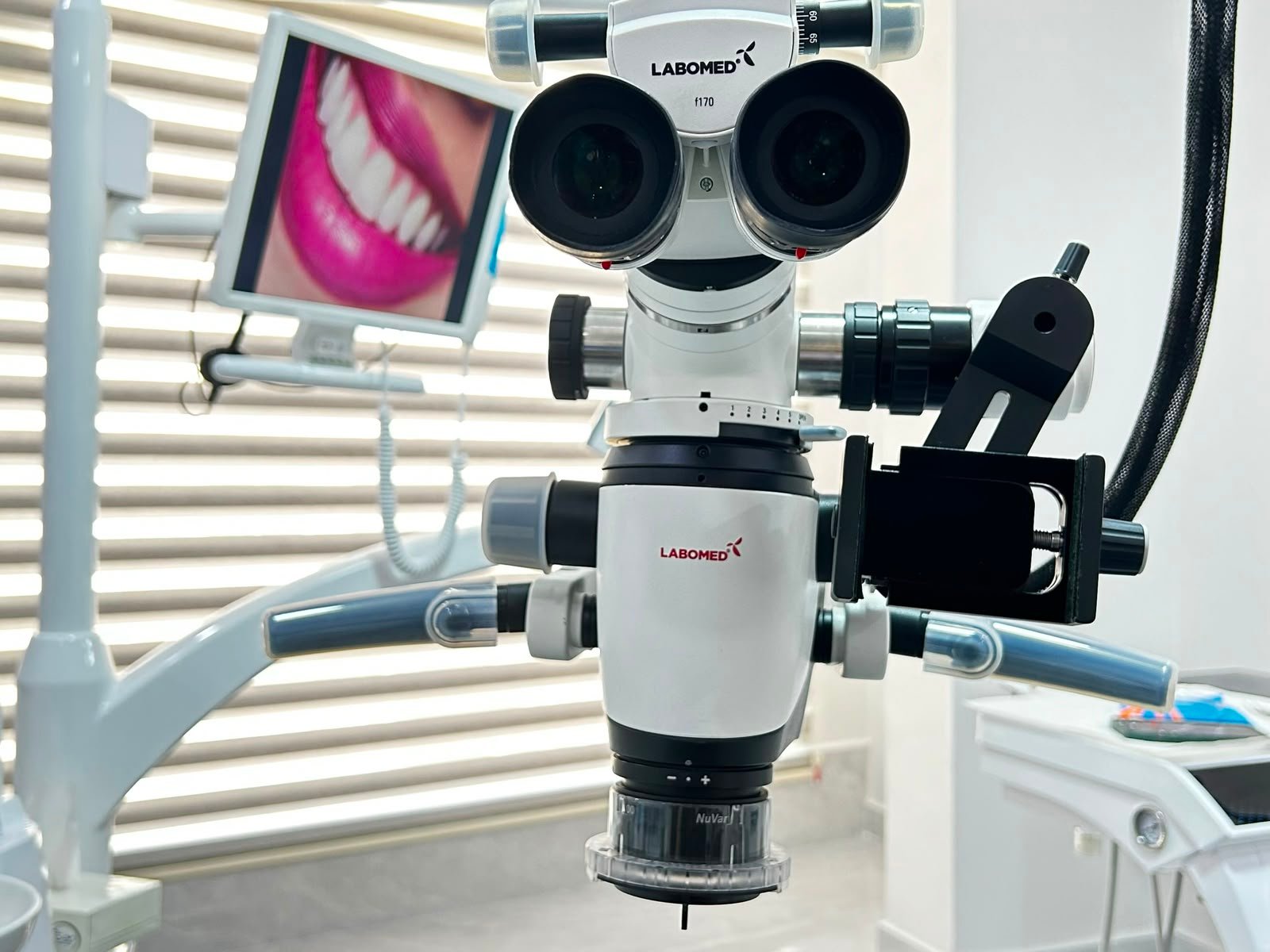
It starts with a clinical examination of the gums and neighbouring teeth, followed by imaging to assess bone density and height and to map nerve positions and sinus locations. Your general health and current medications are reviewed at the same time. This stage determines whether you’re a direct candidate or need preparation first — and it should never be shortened.
This covers treating any gum inflammation, removing calculus, addressing decay elsewhere in the mouth, and sometimes extracting the damaged tooth if it’s still in place. Placing an implant into an unhealthy mouth starts the whole treatment from a weak position, so this stage is a direct investment in the final result.
Performed under local anaesthesia, usually taking between thirty and sixty minutes for a single implant. A precise site is prepared in the bone, the fixture is seated, and the area is closed. Most patients describe the procedure as less unpleasant than they expected — the real discomfort, when it comes, is after the anaesthetic wears off rather than during the work itself.
This is the window in which bone grows around the fixture, typically three to six months. It varies by jaw: the lower jaw is usually faster because its bone is denser, while the upper jaw takes longer. Periodic reviews during this period confirm that integration is progressing as expected.
Once integration is complete, the abutment is fitted and an impression or digital scan is taken so the crown can be fabricated to match your natural teeth in shape and shade. The crown is then seated and the bite carefully adjusted — because any uneven loading on an implant causes problems down the line.
The treatment doesn’t end when the crown goes on. Regular reviews assess gum health around the implant and monitor bone levels, alongside routine professional cleaning. Patients who keep their follow-up appointments are the ones who get the longest service from their implants.
The most frequently asked question, and the honest answer is that it depends on your case. This gives a realistic sense of the range:
| Scenario | Approximate timeline |
|---|---|
| Conventional implant, healthy bone, lower jaw | 3 to 4 months |
| Conventional implant, upper jaw | 4 to 6 months |
| Immediate placement after extraction | Saves a surgical visit; integration still required |
| Implant with bone grafting | 6 to 9 months |
| Implant with sinus lift | 6 to 9 months or longer |
These figures are illustrative only; your dentist determines the real timeline after assessment. And a note of caution: any clinic promising a complete, finished implant in a matter of days without explaining the integration phase is selling an offer, not presenting a treatment plan.
A direct candidate has healthy gums, adequate bone in both height and width, stable general health, and a realistic commitment to oral hygiene and follow-up appointments.
Who needs preparation before starting:
As for age, there’s no upper limit as long as general health allows. The lower limit is tied to jaw growth, which is why implants aren’t placed in teenagers until growth is complete.
Implants are among the higher-success procedures in dentistry when the right conditions are in place. The variables that decide the outcome are well established.
What raises success rates:
The most common causes of failure:
Notice that most failure causes sit either before the surgery, in planning, or after it, in aftercare — not in the operation itself. That’s the difference between a clinic working to a method and one that performs a procedure and considers the relationship finished. For more on evaluating the clinic itself, see our guide on how to choose the best dental clinic in Tabarbour.
No fixed figure can be given before an examination, because the same procedure varies enormously between cases. Understanding the variables, though, lets you read any quote you receive properly:
One question worth asking every time: “Does this price include the fixture, the abutment and the crown together?” Many unusually low quotes cover the fixture alone, with the rest appearing later. Ask for a written breakdown showing every item and the expected number of visits.
Get a clear breakdown for your case
Contact Zoom Dental Clinic in Tabarbour for an assessment based on imaging and examination, with every item explained before anything begins.
Implants don’t decay, but the gum and bone around them can become inflamed exactly like any natural tooth. So: brushing twice daily, cleaning between the teeth around the implant with floss or an interdental brush, and regular professional cleaning appointments. These unglamorous habits are what keep an implant serving you for years.
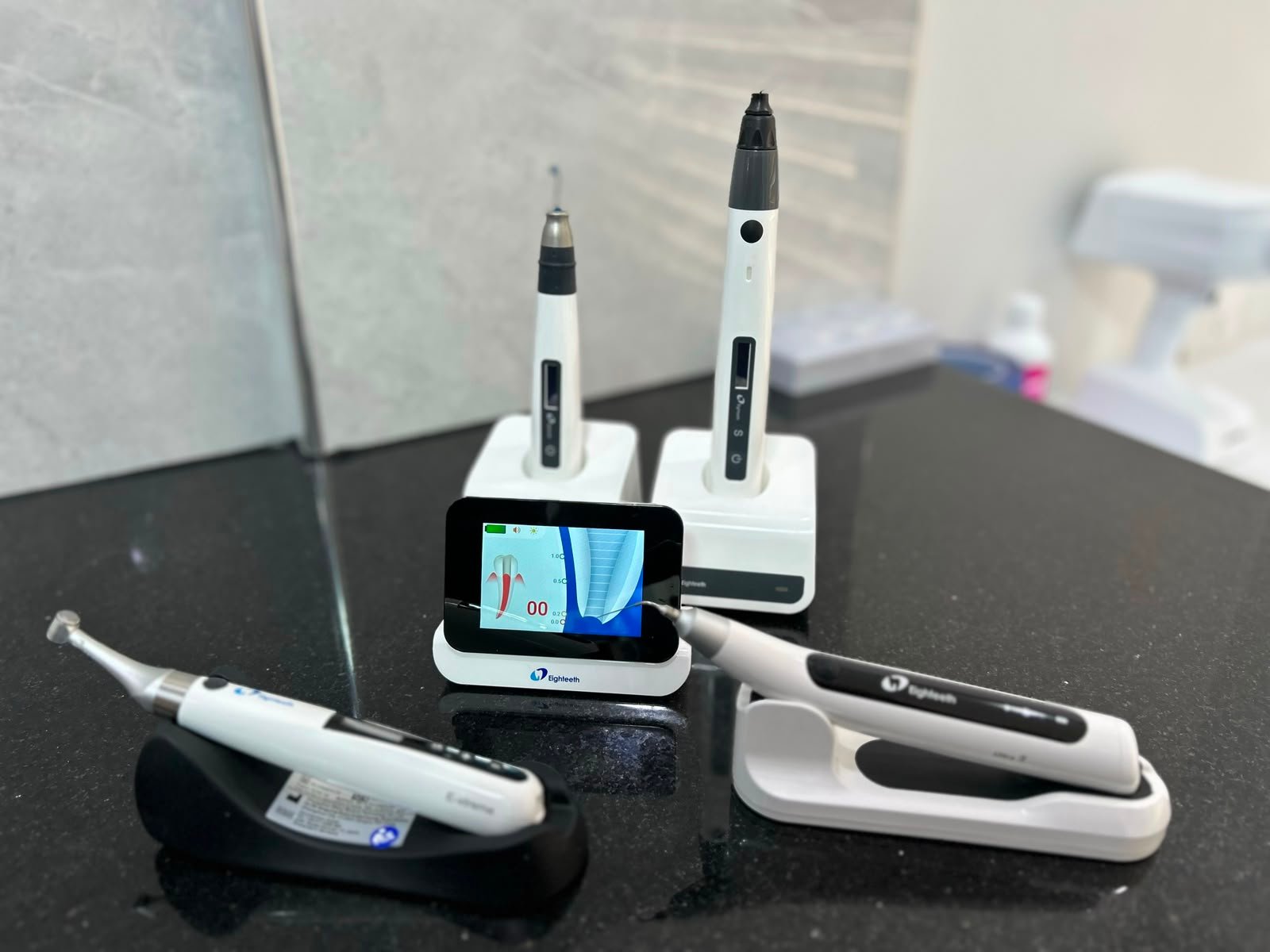
At Zoom Dental Clinic in Tabarbour, every implant case begins with diagnosis rather than a price quote. The elements that support that approach are in the clinic itself:
To understand more about how the clinic works with patients, visit the About page.
Address: Tabarbour, Amman, Jordan
Phone: 0790793443
Email: info@zoomdentaljo.com
Working hours: Saturday to Wednesday, 10:00 AM – 8:00 PM. Thursday, 10:00 AM – 6:00 PM.
The procedure is carried out under local anaesthesia, so no pain is felt during placement itself. Once the anaesthetic wears off, mild discomfort or swelling for a few days is normal and is managed with prescribed pain relief. Most patients describe the experience as less unpleasant than they anticipated, and comfort levels depend heavily on how carefully the case was planned beforehand.
Typically three to six months in cases that don’t require bone grafting, because the bone needs time to fuse with the fixture. The lower jaw is usually faster than the upper jaw. Cases needing bone grafting or a sinus lift can extend to six to nine months or longer.
The fixture is designed to last many years when it integrates properly and the patient maintains good oral hygiene and regular reviews. The visible crown may need replacing after a longer period due to normal wear. The factors that most affect lifespan are smoking, neglected cleaning, and untreated teeth grinding.
In many cases yes, but only after a preparatory step such as bone grafting or a sinus lift in the upper jaw. These procedures build up bone volume and make implant placement possible, though they extend the overall treatment time. The need for them is identified through imaging during planning, not discovered during surgery.
With immediate placement the fixture goes in during the same visit as the extraction, reducing the number of surgeries. Conventional placement happens after the extraction site has healed. Immediate placement requires specific conditions: sufficient healthy bone around the socket and no active infection. Your dentist decides which is appropriate after imaging and clinical examination.
Yes, provided blood sugar is well controlled and stable, since elevated levels directly affect bone and gum healing and increase infection risk. Coordination with the treating physician is standard, along with closer post-operative monitoring. Uncontrolled diabetes is a direct reason to postpone implant surgery until it’s stabilised.
Smoking doesn’t rule implants out absolutely, but it noticeably raises the failure rate because it reduces blood flow to the gums and slows healing. Abstaining before surgery and throughout the healing period is strongly advised, and stopping altogether is the best option for the implant’s long-term survival.
Cost is driven by the number of implants required, the implant system used, whether bone grafting or a sinus lift is needed, the type of final crown, and any preparatory treatment such as gum therapy or extraction. Always ask whether the quoted price covers the fixture, abutment and crown together or the fixture alone, and request a written breakdown before starting.
The implant and crown cannot decay because they aren’t natural tissue. However, the gum and bone surrounding the implant can become inflamed exactly like around a natural tooth — a condition known as peri-implantitis. That’s why daily cleaning and regular professional reviews remain essential even though the implant itself is artificial.
For the first few days, soft, cool or lukewarm foods are recommended while avoiding chewing on the implant side. Your diet then returns to normal gradually as directed by your dentist. Full, normal chewing on the implant itself comes only after the final crown is fitted and bone integration is complete.
There’s no upper age limit as long as general health permits the procedure and the jawbone is suitable. The lower limit is tied to completed jaw growth, which is why implants aren’t normally placed in teenagers — temporary solutions are used until growth finishes.
ZOOM DENTAL CLINIC — TABARBOUR, AMMAN
Start your implant treatment with an accurate diagnosis
Book an assessment including examination and imaging, and receive a clear plan covering stages, timeline and cost before anything begins.
