Address
Tabarbour, Amman, Jordan
Work Hours
Saturday – Wednesday:
10:00 AM – 8:00 PM
Thursday:
10:00 AM – 6:00 PM

Root canal treatment removes inflamed or infected tissue from inside a tooth, cleans and disinfects the root canal system, then seals it so the natural tooth can stay in place. It is the treatment that saves a tooth instead of extracting it.
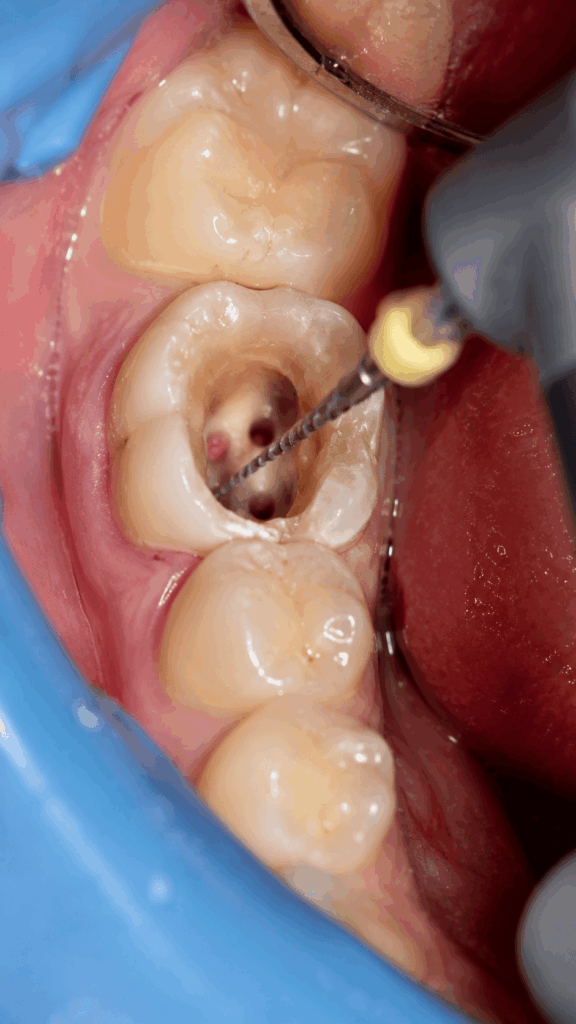
At Zoom Dental Clinic, root canal treatment in Tabarbour is carried out using a Magna dental microscope, an electronic apex locator and dedicated endodontic instruments when clinically indicated. Working under magnification matters here more than in almost any other procedure, because molars often contain narrow or hidden canals that are difficult to locate with the naked eye — and a missed canal is one of the most common reasons a treated tooth keeps hurting.
Every case begins with examination and imaging, never with assumptions. Toothache has several possible causes, and not every painful tooth needs endodontic treatment. Sometimes a deep filling, a cracked cusp or gum inflammation is the real source, and treating the wrong thing wastes both time and money.
Root canal treatment becomes necessary when the pulp — the living tissue containing the nerve and blood vessels inside the tooth — is damaged beyond recovery. That damage usually develops in one of five ways: deep decay that has reached the pulp chamber, a crack or fracture extending into the tooth, trauma from an impact, repeated dental procedures on the same tooth over the years, or leakage under an old restoration that allowed bacteria back in.
It is also required when infection has already travelled past the root tip into the surrounding bone, producing an abscess or a visible swelling. These are the cases that should not be postponed.
The decision is not automatic. Before recommending root canal treatment in Tabarbour, the dentist assesses whether the tooth can realistically be restored afterwards. A severe fracture below the gum line, too little remaining tooth structure to support a crown, or advanced damage to the supporting tissues can change the recommendation toward extraction and replacement instead. An honest assessment at this stage protects you from paying for a treatment that was never going to hold.
Pulp problems rarely announce themselves the same way in every patient, which is why the symptom list is broader than most people expect.
The most common signs are severe or throbbing toothache, pain that intensifies at night or when lying down, and lingering sensitivity to hot or cold that continues long after the trigger is removed. Normal sensitivity fades within seconds; pulp-related sensitivity does not.
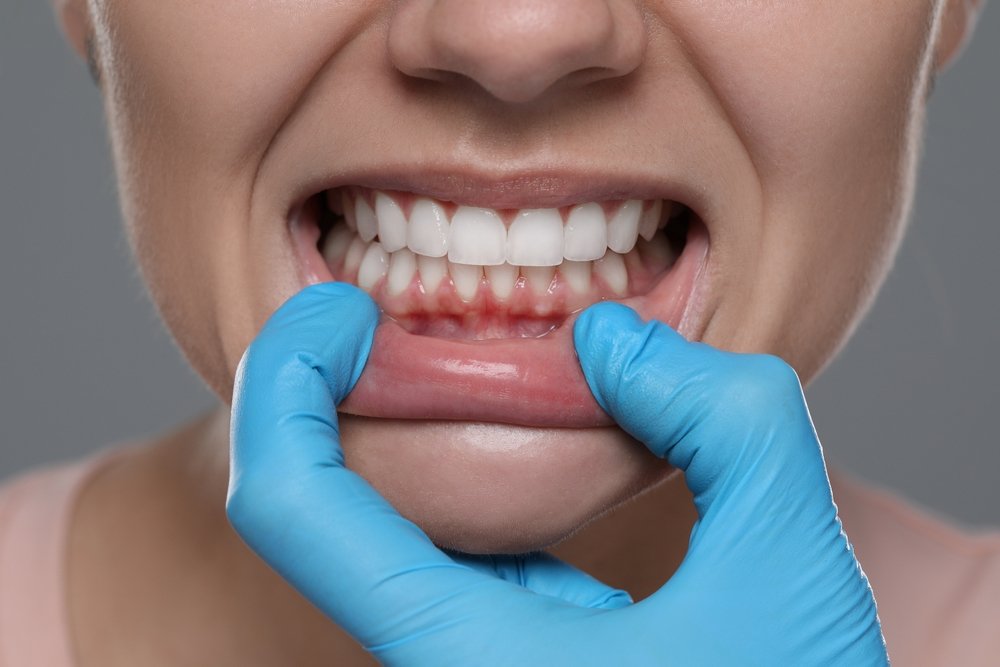
Other signs include pain when biting or applying pressure, a pimple-like bump on the gum near the tooth, swelling or tenderness in the surrounding gum, a bad taste or persistent odour from the area, and gradual darkening of the tooth itself.
Just as important: some infected teeth cause no pain at all. Once the nerve tissue dies, the pain can disappear completely while the infection continues silently in the bone. This is exactly how problems are discovered on routine X-rays during a check-up — and it is a strong argument for not skipping regular examinations.
This is the question patients ask most often, and the honest answer surprises many of them: for most people, the treatment is what stops the pain rather than causing it.
Local anaesthesia is used to numb the tooth and surrounding tissue, so during the procedure you should feel pressure and vibration rather than pain. If you do feel discomfort at any point, the dentist can add anaesthetic — you are not expected to endure it, and telling us immediately is the right thing to do.
An infected tooth can occasionally be harder to numb, particularly when there is an active abscess, because inflamed tissue responds differently to anaesthetic. In those cases the approach is adjusted rather than pushed through.
Afterwards, mild tenderness when biting for a few days is normal and settles with the pain relief your dentist recommends. What is not normal is pain that increases after day three, swelling that grows rather than subsides, or a return of severe throbbing — contact the clinic if any of these occur.
Most root canal treatments are completed in one or two visits of about sixty to ninety minutes each.
What determines the number of visits is the tooth itself. A front tooth usually has a single canal and is often finished in one appointment. A back molar can have three, four or occasionally more canals, each of which must be located, cleaned, shaped and sealed individually — which naturally takes longer. Curved or calcified canals, a re-treatment of a previously treated tooth, and the presence of active infection all add time.
If an abscess is present, the dentist may choose to disinfect the canals and place a medicated dressing, then complete the sealing at a second visit once the infection has settled. This is a clinical decision, not a delay.
One point worth planning for: the treatment is not finished when the canals are sealed. A final restoration — usually a crown on back teeth — is needed within a few weeks to protect the tooth from fracture. Treat the crown as part of the treatment, not an optional extra.
Magnification and focused illumination let the clinician see fine detail inside the tooth: canal openings, side branches and calcified areas that are difficult or impossible to identify with the naked eye. A missed canal is one of the leading reasons a treated tooth continues to cause symptoms, so improved visualisation directly improves the odds that the treatment holds. It also supports more conservative work, because the dentist removes only what needs removing rather than working blind.
The apex locator measures the working length of each canal electronically — that is, exactly where the root ends. Getting this measurement right is critical: cleaning and filling short of the apex leaves infected tissue behind, while going past it irritates the surrounding bone. The device allows the dentist to plan more accurately alongside radiographs, and reduces the number of X-rays needed during the appointment.
Dedicated rotary shaping systems and irrigation protocols are used to clean and shape the canal system according to its actual anatomy rather than forcing a standard shape onto every tooth. Flexible instruments follow curved canals more safely, and controlled irrigation reaches the areas mechanical cleaning alone cannot. Instruments are handled under the clinic’s sterilization and infection control protocols throughout.
Dentist with over 19 years of international experience.
Dr. Yola Kovalenka is a distinguished medical professional in the field of dentistry.
In his practice, Dr. Mohammad Hatamleh combined academic excellence with advanced clinical training.
At Zoom Dental Clinic, every smile is treated with care, precision, and attention to detail. Our dentists provide a wide range of dental services, from preventive care and cosmetic treatments to restorative dentistry and advanced dental solutions.
Not always, but back teeth usually do. A treated molar or premolar loses a significant amount of internal structure and takes the full force of chewing, which makes it vulnerable to fracture without full coverage. Front teeth with limited damage can sometimes be restored with a filling alone. Your dentist assesses the remaining tooth structure, the position of the tooth and your bite before recommending either option.
A temporary filling is not designed to seal the tooth long term. Leaving it in place for weeks or months allows bacteria and saliva to leak back into the sealed canal system, which can reinfect the tooth and undo the treatment entirely. A secure restoration also protects the tooth from fracture under chewing pressure. Delaying this step is one of the most common — and most avoidable — reasons root canal treatment fails.
A tooth can occasionally remain symptomatic or become reinfected. The usual causes are complex canal anatomy that was difficult to fully clean, a canal that was not located during the original treatment, a new fracture, or a delayed and leaking restoration. In many of these cases the tooth can still be saved through re-treatment, where the existing filling material is removed and the canal system is cleaned and sealed again. Surgical options exist for specific situations.
Extraction is faster on the day, but it creates a gap that needs replacing — usually with an implant or a bridge, both of which take longer and cost more overall than saving the original tooth. Nothing performs quite like a natural tooth, and keeping it also preserves the surrounding bone. Extraction becomes the appropriate choice when the tooth is fractured below the gum line, cannot be restored, or has a poor long-term prognosis. It is a clinical decision based on the tooth, not a shortcut.
Avoid chewing hard food on the treated side until the final restoration is completed, and take any medication exactly as directed. Mild tenderness when biting for a few days is expected and settles on its own. Keep brushing and cleaning between the teeth normally, including around the treated tooth. Contact the clinic if pain increases after the third day, if swelling develops or grows, or if the temporary filling comes out.
A tooth that has been properly cleaned, sealed and restored with a well-fitting crown can function for many years. The variables that matter most are how promptly the final restoration was placed, how much healthy tooth structure remained, your daily oral hygiene, and whether you grind your teeth at night. Treated teeth still need regular check-ups — they can develop decay at the margins of the restoration or gum problems like any other tooth.
Why Choose Us
We use modern diagnostic
and treatment technology to support
accurate evaluation, detailed planning,
and precise dental care.
Our dental team provides attentive care,
clear treatment guidance, and
recommendationsbased on each
patient’s individual needs.
Every patient is different. We develop treatment
recommendations around your oral health,
clinical needs, comfort, and treatment goals.
From the first consultation through follow-up
care, we explain each step clearly and work
to create a calm, respectful, and
reassuring experience.
Choosing the right dental service starts with understanding your options. At Zoom Dental Clinic, we focus on clear communication, modern technology, strict sterilization, and treatment recommendations based on each patient’s individual needs.