Address
Tabarbour, Amman, Jordan
Work Hours
Saturday – Wednesday:
10:00 AM – 8:00 PM
Thursday:
10:00 AM – 6:00 PM
Address
Tabarbour, Amman, Jordan
Work Hours
Saturday – Wednesday:
10:00 AM – 8:00 PM
Thursday:
10:00 AM – 6:00 PM
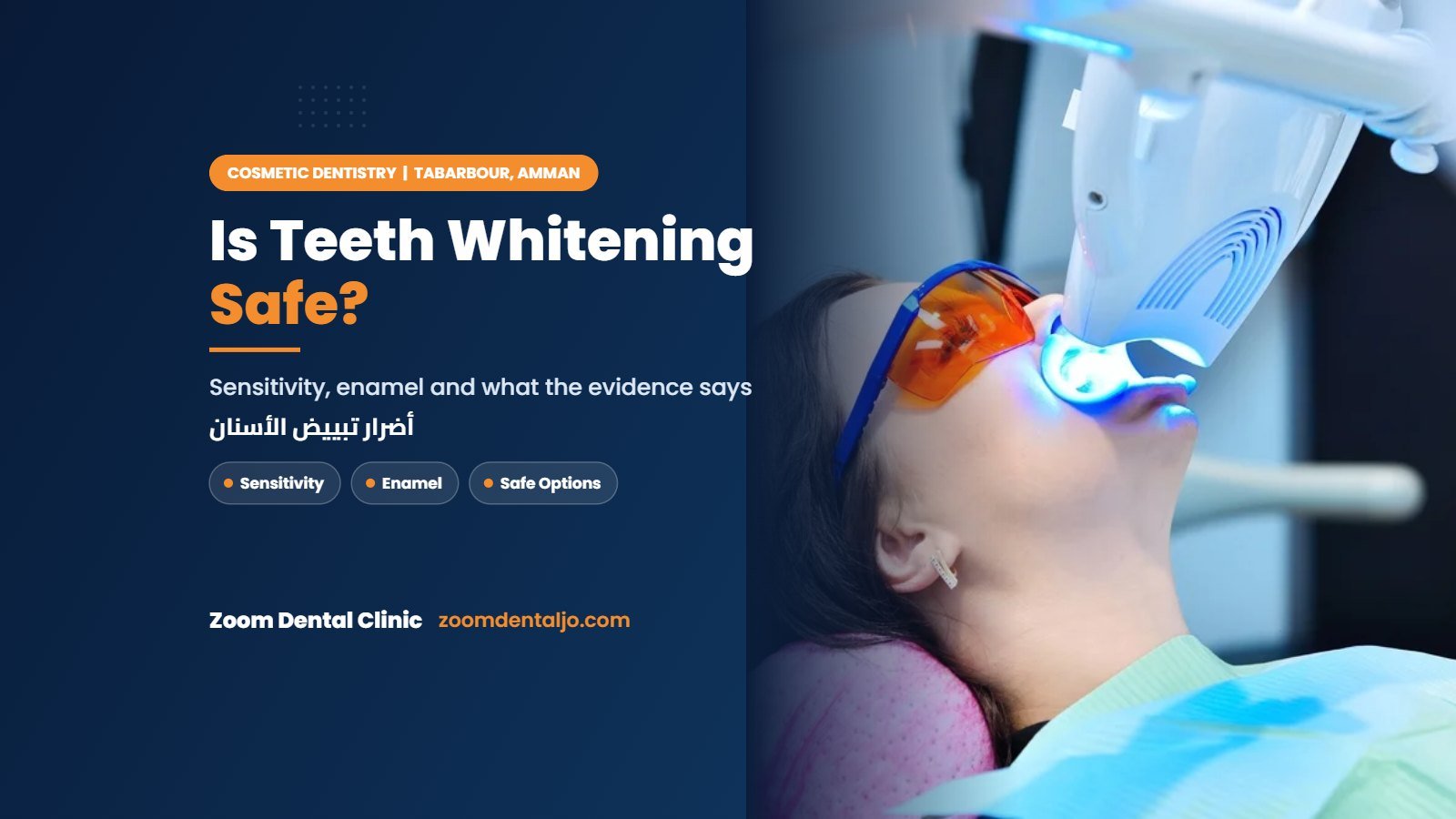
Plenty of people hold off on whitening because of one line they’ve heard many times: “whitening ruins your teeth”. So, is teeth whitening safe? Answering properly means separating three very different things: whitening supervised by a dentist, retail products, and the home remedies that circulate on social media.
This article answers with what the studies show: the most common side effect and how long it lasts, whether enamel is weakened, why crowns and veneers don’t whiten, who should wait, and how to keep sensitivity to a minimum.
In this article
The short answer
Whitening supervised by a dentist is safe for enamel in most people. The most common side effect is temporary sensitivity that usually fades within days, and the gel can mildly irritate the gums if it touches them. Real harm usually comes from unregulated products, abrasive pastes such as charcoal, or whitening over untreated decay and gum disease.
Sensitivity is what most patients notice. A 2021 paper in Scientific Reports notes that it affects between 67% and 87% of patients in clinical trials and usually clears within four to seven days.
It isn’t caused by wear. Some of the peroxide travels through the tooth to the nerve and irritates it for a while. Annoying, but temporary, and it fades once whitening ends.
The key question, and the reassuring answer: available studies show no clinically meaningful harm to enamel when whitening is done properly. Some lab studies measured small changes in surface hardness, but they are minor and don’t mean the tooth is weaker in everyday use.
Everything hinges on “done properly”: the right concentration, a controlled duration, and a healthy mouth before you start.
There are two dentist-supervised options: in-clinic whitening with a stronger gel in a single session, and at-home whitening with custom trays and a milder gel over several days. A 2016 meta-analysis in Operative Dentistry found no meaningful difference between them in sensitivity risk, sensitivity intensity or final shade.
| Factor | In-clinic | At-home, dentist-supervised |
|---|---|---|
| Speed | A visible result in one session | A gradual result over days |
| Control | Dentist protects the gums and monitors throughout | Depends on following instructions |
| Best for | A quick result before an occasion | A gradual approach or later top-ups |
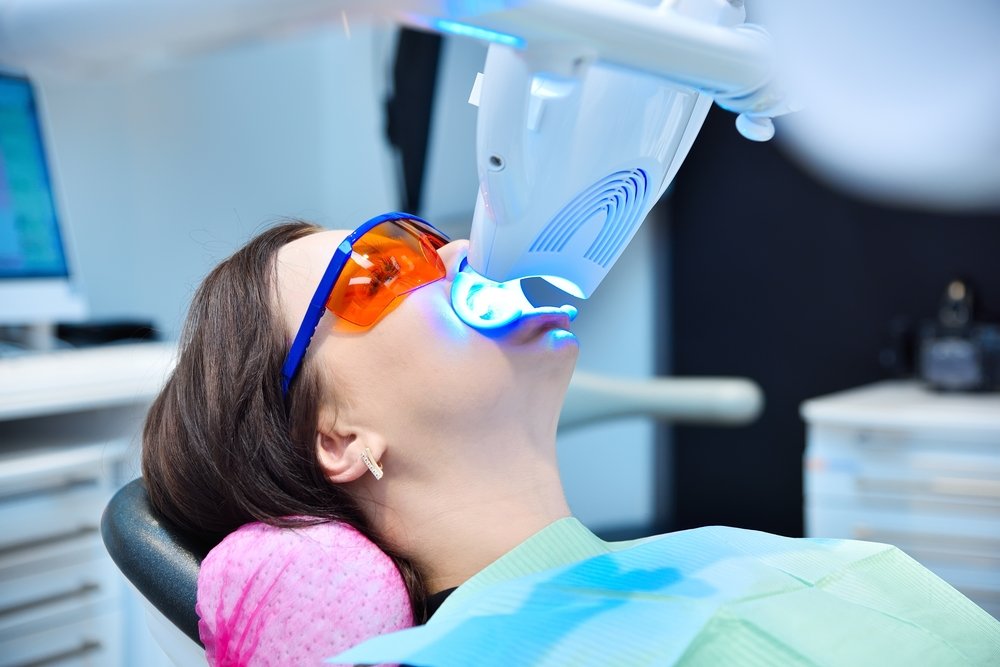
Light or laser is sometimes used with in-clinic whitening. A 2019 review in Operative Dentistry found the final shade didn’t differ much with or without light, while some studies noted milder sensitivity with it. The practical takeaway: concentration, the dentist’s experience and proper preparation decide the result and the safety, not the device alone.
Want a brighter smile without the risk?
Book an assessment at Zoom Dental Clinic in Tabarbour. We check your teeth and gums first, then choose the right whitening for you.
A review of ten clinical trials in the Journal of Dentistry found desensitising agents such as potassium nitrate and fluoride roughly halve the odds of sensitivity. Practical tips:
We don’t start whitening before an exam that rules out decay and gum disease, and we usually begin with teeth cleaning in Tabarbour, because some of what looks like yellowing is tartar that cleaning removes. If the discolouration is internal or the front teeth have old restorations, we’ll explain alternatives such as dental veneers. Learn more about teeth whitening in Tabarbour.
A brighter smile with a safe plan
An assessment tells you whether whitening suits you, which type is best and what result to expect.
Or call us directly on 0790793443
Dentist-supervised whitening at the right concentration causes no clinically meaningful enamel damage according to available studies. Harm usually comes from unregulated products, abrasive pastes or home remedies.
It usually clears within four to seven days, because it’s a temporary nerve irritation rather than damage to the tooth structure.
Studies found little difference in final shade with or without light, and some found milder sensitivity with it. The result depends on the gel’s concentration, proper preparation and a dentist’s supervision.
No. Crowns, veneers and tooth-coloured fillings don’t change colour with whitening, so front-tooth restorations may need replacing to match your new shade.
A scientific review of charcoal toothpastes found they contain no real bleaching agent, may be abrasive to enamel, and most lack fluoride.
At Zoom Dental Clinic in Tabarbour we start with an exam and cleaning, then choose the right whitening for you. Book through the contact form or call 0790793443.
