Address
Tabarbour, Amman, Jordan
Work Hours
Saturday – Wednesday:
10:00 AM – 8:00 PM
Thursday:
10:00 AM – 6:00 PM

Address
Tabarbour, Amman, Jordan
Work Hours
Saturday – Wednesday:
10:00 AM – 8:00 PM
Thursday:
10:00 AM – 6:00 PM
How long do braces take? It is usually the first question patients ask at an orthodontic assessment, often before they ask about cost. That makes sense: orthodontic treatment is a commitment of months, sometimes years, and you deserve to know what you are signing up for. The trouble is that most answers are either too vague (“about two years”) or unrealistic promises of a perfect smile in a few months.
This guide explains how long braces take with a clear picture: typical timelines for different cases, the stages treatment goes through, the eight factors that make it shorter or longer, and what you can do to finish on schedule. You will also see how we estimate treatment time for each patient at Zoom Dental Clinic in Tabarbour.
In this article
The short answer
Most orthodontic cases take one to two years. Simple cases, such as a small gap or mild crowding of the front teeth, can finish in six months to a year, while complex cases and significant bite problems may take more than two years. After active treatment comes the retention phase with a retainer, which is ongoing and not usually counted in the treatment time.
The table below shows how long braces take by type of case. These are general figures; your exact timeline can only be estimated after an exam and X-rays.
| Type of case | Typical treatment time |
|---|---|
| Minor relapse after earlier treatment | A few months to six months |
| Small gaps or mild crowding | Six months to a year |
| Moderate crowding or a mild bite issue | One year to 18 months |
| Severe crowding or a clear bite problem | 18 months to two and a half years |
| Complex cases needing extractions or large movements | Two years or more |
When people ask how long braces take, they usually mean the active phase. The full journey actually has five stages:
The further the teeth need to travel, the longer braces take. Closing a small gap between two front teeth is a very different job from correcting severe crowding in both jaws.
Some movements are slower than others. Tipping a tooth slightly forward or back is quicker than fully rotating it, moving it vertically, or moving the root itself rather than just the crown.
In children and teenagers the jawbone is still growing, teeth move more easily, and jaw growth itself can sometimes be guided. Adults can absolutely have orthodontic treatment, but movement may be a little slower. This is one reason early checks for children help, and they are part of our pediatric dentistry in Tabarbour.
With clear aligners, every hour they are out of your mouth pushes the plan back. With braces, the elastics your dentist asks you to wear between the jaws are key to correcting the bite, and skipping them can add months.
Check-ups are not a formality. They are when the wire is adjusted or your aligner progress is confirmed. Repeatedly postponing visits means your teeth spend longer without the adjustment they need.
Every bracket broken by hard food and every lost aligner pauses part of the movement until it is fixed. Let that happen often and weeks turn into months.
Cavities or gum inflammation need treating before or during orthodontics. Inflamed gums slow movement and may force your dentist to use lighter forces, which is why good hygiene and regular professional teeth cleaning are part of the treatment.
With severe crowding, the jaw sometimes simply does not have room for every tooth, so one or more teeth are removed to make space. Closing those spaces takes extra time, so these cases are usually among the longest.
Want to know your own timeline?
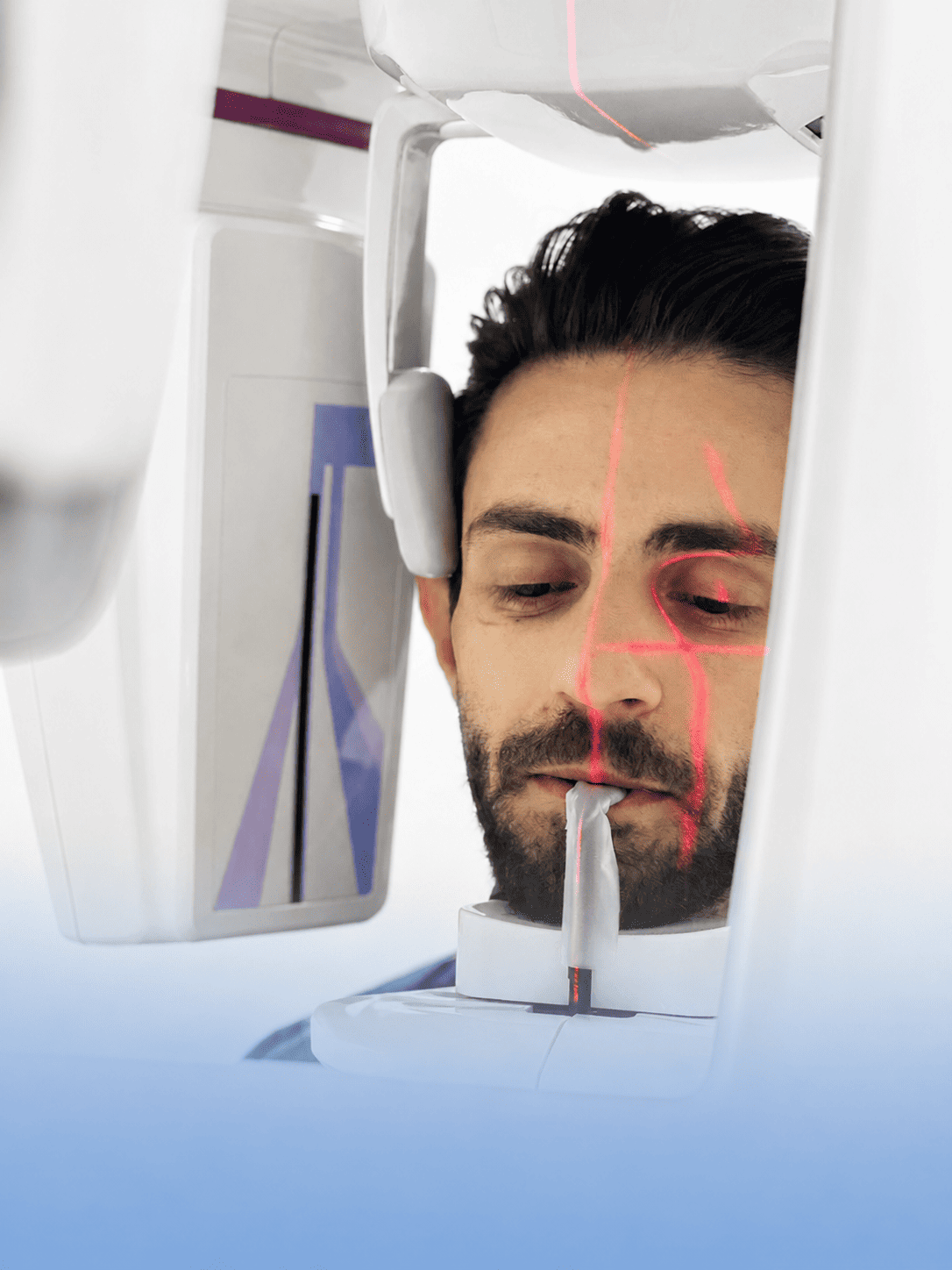
At an assessment at Zoom Dental Clinic in Tabarbour, we examine your teeth with X-rays and a digital scan and give you a clear plan with the expected treatment time and the right appliance.
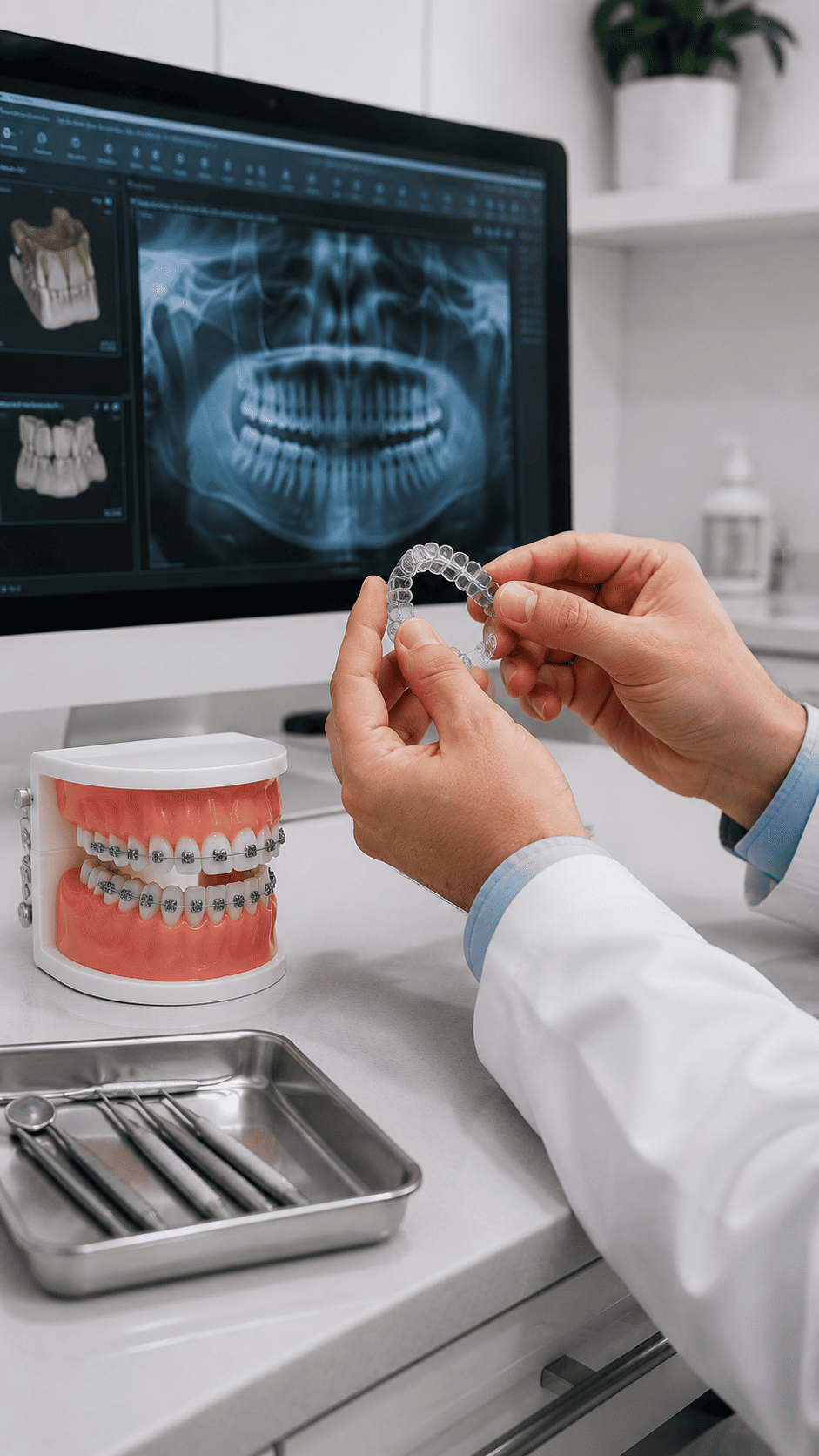
Not necessarily. For mild and moderate cases, treatment time is similar with both, provided the aligners are worn 20 to 22 hours a day. In complex cases, braces may be faster and offer more control over difficult movements. What really matters is choosing the right appliance for your case from the start, because the wrong choice is what genuinely drags treatment out. We cover this in detail in clear aligners vs braces.
Can you change how long braces take? The honest answer: you can prevent delays far more than you can speed up the movement itself. Teeth move at a pace set by the surrounding bone, and pushing them harder than needed does not make them faster; it can harm the roots and bone and end up lengthening treatment.
So be cautious of promises to finish any case in just a few months. Careful planning with X-rays and digital scans is what keeps treatment on the shortest safe path for your case, because every movement is planned from the start rather than adjusted by trial and error.
You cannot control everything about how long braces take, but these habits keep your orthodontic treatment time on schedule:
Once treatment ends, an equally important phase begins: retention. To learn about retainer types and how long to wear one, read our guide to the retainer after braces.
We offer orthodontics in Tabarbour with both braces and clear aligners, and every case starts with a clear estimate of how long your braces or aligners will take before you commit:
Orthodontic cases are handled by Dr. Yola Kovalenko, a dentist with more than 19 years of experience. You can read patient reviews on the clinic’s ClinicsJo page, or see our guide on how to choose a dental clinic.
Start with a clear plan and a known timeline
Book an assessment to find out exactly what your case needs, how long it will take, and which appliance suits you.
Or call us directly on 0790793443
Most cases take one to two years. Simple cases can finish in six months to a year, and complex cases may need more than two years. Your exact timeline is set after an exam, X-rays and a digital scan.
Simple cases can take six months to a year, and moderate cases often one year to 18 months. The key condition is wearing the aligners 20 to 22 hours a day, since poor wear is the most common reason treatment runs late.
Yes, in some simple cases, such as closing a small gap, correcting mild crowding of the front teeth, or fixing minor relapse after earlier treatment. Cases involving bite problems usually need longer.
Teeth can move slightly more slowly in adults because the jaw has finished growing, but in many cases the difference is small. Orthodontic treatment is possible at any age as long as the gums and bone are healthy.
The most common causes are not wearing aligners enough, skipping elastics, postponing check-ups, breaking brackets with hard food, and gum inflammation from poor hygiene.
You can avoid delays by following instructions, but moving teeth with more force than needed is not recommended, as it can harm the roots and bone. Careful planning from the start is what keeps treatment on the shortest safe timeline.
With braces, visits are usually every four to eight weeks for wire adjustments. With clear aligners visits are often less frequent, since the plan is designed in advance, and your dentist sets the right interval for your case.
Book an assessment at Zoom Dental Clinic in Tabarbour. We examine your teeth with X-rays and a digital scan, then explain your expected treatment time and the right appliance. Book through the contact form on the website or call 0790793443.
